Showing posts with label Maryland Wine. Show all posts

Thursday, May 7, 2026

The April Freeze That Rewrote the 2026 Vintage: Virginia and Maryland’s Grape Losses

The Mid‑Atlantic wine industry is no stranger to weather drama, but the April 21st 2026 freeze and radiational frost carved its own chapter into regional history.  After an unseasonably warm March pushed vines into early budbreak, a sudden plunge into the low 20s°F delivered a blow that many growers describe as the most severe in decades. This was a hard freeze - not simply frost - and even the most orchestrated mitigation efforts had no affect. Other wineries experienced radiational frost where the heavier cold air flowed to the lower lying vineyard plots, pushing up the warmer air. What followed was not just a crop loss -- it was a structural shock to both Maryland and Virginia, whose wine economies have matured into nationally recognized industries.

Frost mitigation in vineyards and orchards centers on one goal: keeping developing buds and blossoms above the critical temperature at which tissues are damaged. Growers typically combine site selection, canopy management, and active frost‑control tools to reduce risk. Cold air drainage is foundational -- orchards and vineyards are often planted on slopes or elevated benches so dense, freezing air can flow away rather than pool around vines or trees. Within the block, growers maintain open alleyways and avoid windbreaks that trap cold air. These passive strategies don’t eliminate frost risk, but they significantly reduce the frequency and severity of damaging events.

When temperatures drop toward freezing, growers turn to active interventions. Wind machines or helicopters -- for businesses with deeper pockets -- mix warmer air from the inversion layer with colder surface air, often raising temperatures by 2–4°F across several acres. Potassium-based sprays add a useful physiological buffer to the broader frost‑mitigation toolkit used in vineyards and orchards. When applied ahead of a cold event, potassium strengthens cell membranes, improves osmotic balance, and supports carbohydrate movement -- factors that help buds tolerate slightly lower temperatures before injury occurs. Overhead irrigation is another widely used method: as water freezes around buds, it releases latent heat, keeping tissues at 32°F even when ambient temperatures fall lower. Some regions rely on heaters or strategically placed burn barrels or wood piles to raise temperatures. 

Yet, on April 21st, when the freeze arrived, most vineyards were past the point where wind machines, fires, or helicopter downdrafts could meaningfully help. Growers across the region described the same morning scene: blackened shoots, collapsed leaves, and the unmistakable smell of frost‑burned vegetation. In Maryland, the damage spread from the western shore of the Chesapeake to the Blue Ridge Mountains, with the most severe cases found in the Catoctin Valley along the Route 15 corridor. Many wineries reported 90-100% loss of both primary and secondary buds.  For instance, Black Ankle Vineyards - a very respected producer - lost their entire 2026 crop.

In Virginia, the damage was widespread, most notably, from the Loudoun Valley, the Shenandoah Valley, and throughout the Monticello AVA. In that historic American Viticultural Area, wineries also reported 90-100% loss of both primary and secondary buds.   Apple and pear orchards in the Shenandoah Valley were particularly hit hard because an earlier April frost had damaged many primary buds and the April 21st event killed off the secondary shoots. 

Secondary buds sit beside the primary bud within the compound bud. When the primary bud is damaged, the secondary bud typically survives and can push a new shoot in spring. This replacement shoot is vital. First, it restores canopy growth, allowing the vine to photosynthesize and rebuild carbohydrate reserves. Second, it often produces fruit, though usually fewer clusters than a primary bud would have. In short, they act as the vine’s built‑in backup system, ensuring both fruiting potential and the maintenance of vegetative growth needed for long‑term vine health.

In theory, vines planted on higher plots are safer from the radiational frost since the heavier cold air flows to the lower areas.  And, in theory, early budding grape varieties like Pinot Gris would be more susceptible to frost damage.  And Virginia's Three Fox Vineyards lost most of these plantings. In Maryland, Catoctin Breeze Vineyard owner Adam Fizyta reported they lost 100% of their AlbariƱo - an early to mid budding variety.  And in an informative blog post, the The Vineyards at Dodon detailed that in their region just west of the Chesapeake Bay, "Only the vineyards along the Chesapeake and at 6-800 feet above a valley floor survived unscathed..."

However, these expectations were not uniformly felt. Melissa Aellen, winemaker at Maryland's Linganore Winecellarsinformed us that a plot of Petit Verdot (which traditionally buds early) that was planted at a higher elevation survived mostly intact and will account for some of the 10% of estate vines that survived. Similarly, but in contrast, Keith Morris, the General Manager at Big Cork Vineyards reported that about 80% of their Petit Verdot survived, but these vines were planted at the winery's lowest plots. 

Another example showing the unpredictability of the damage occurred in Lindon, Virginia -- located just east of Front Royal. Over several Facebook posts, Jim Law of Linden Vineyards reported that for the first time the famous Hardscrabble Vineyard was hit by frost with a possible 20–30% crop loss, unusually high for a vineyard known for its frost resilience. However just across Route 66 to the North, Capstone Vineyards, Crimson Lane Vineyards, and Fox Meadow Winery - a trio of vineyards surrounding St. Dominic's Monastery - fared with only minimal damage.  Yet, on the western edge of Front Royal, Reitano Vineyards lost their entire 2026 crop.

Courtesy of the Virginia Farm Bureau
In those Facebook posts, Jim Law also summarized what growers in the Mid-Atlantic are experiencing. "Finally as to the lower parcels that were completely frosted, we are just hoping they can be back in production for 2027. These poor vines have already experienced two years of sap sucking Spotted Lanternflies, two drought years, and a severe winter. Initial growth is generated by stored carbohydrates from the previous growing season. This spring those frosted shoots had already used up a lot of their reserves, so we worry about how much more is now available."

The Maryland Department of Agriculture called the freeze "one of the most significant crop losses in recent memory." The Virginia Wineries Association characterized the event as one of the most significant frost episodes in 15–20 years. But, economically, what does it mean? Particularly since wineries in Virginia and particularly in Maryland were already working off a 40-50% reduction in yields from 2025 because of several weather and pest events. 

In a lengthy blog post titled 2026, the Lost Vintage, Drew Baker of Burnt Hill Farm and Old Westminster Winery states that both wineries suffered a 100% loss in primary buds equating to a loss of 100 tons of fruit. On average, one ton of grapes yields about sixty cases of finished wine, or 720 bottles; thus 100 tons of lost fruit translates to roughly 72,000 bottles of wine never actualized. Drew also reminds us that, "The fruit may be gone, but the expenses are not. Payroll remains. Equipment costs remain. Repairs remain. Farming inputs remain. We still have a full time team farming these vines. We still have to mow, tuck shoots, manage canopy, monitor disease pressure, train trunks, control weeds, maintain trellis, and make careful decisions block by block."

In addition, the uneven ripening of any remaining primary and secondary shoots will add more to labor costs; this event created even more vineyard maintenance.  As Jim Law states, "With strategic and meticulous thinning some will have a full crop and others a partial crop. However there could be a lack of uniformity. Vines should have even separation between shoots and clusters so each receives the same amount of sun and air flow within the canopy. But in the 'partially frosted' vines we will have clumps of fruitful shoots, crowding some areas and at the same time gaps along the trellis where nothing is growing. Eventually new shoots will emerge with clusters that will be weeks behind. This would lead to uneven ripening and poor wine quality (what we refer to as an 'underripe/overripe' profile). We need to remove the clusters by hand before color change in August while we can still see a distinct difference. By harvest time they would all look the same, but taste very different." And this could delay harvest waiting for these clusters to ripen. Keith Morris conjectured that he wouldn't be surprised to see harvest last into mid-late November for many growers. 

What are producers doing next? Most Maryland farm wineries operate under a Class 4 Limited Winery license where they must either have planted 20 acres of estate vines or "at least 51 percent of the ingredients used in the annual production of the license holder’s wine are Maryland-grown agricultural products".  According to a spokesperson for the Maryland Department of Agriculture, the state has not yet issued a uniform exemption to this regulation, but impacted wineries can can apply for individual exemptions.  The situation is very similar in the Commonwealth. The Virginia ABC requires "Farm Wineries" to grow or lease a specified percentage of the fruit used in the production of their wines -- usually 51%. Wineries can apply for a Fruit Loss Exemption Waiver with the Virginia Department of Agriculture and purchase outside fruit.

Wineries are scrambling to source fruit from other regions. Big Cork Vineyards was able to sign contracts with several Maryland growers on the Eastern Shore that were not overly impacted by the April 21st event.  Several wineries mentioned that they are pivoting to New York - specifically the Niagara Escarpment and Finger Lakes. The Texas Hill Country is another option wineries are exploring, particularly for those wanting to replace lost Tempranillo, Tannat, Viognier, and Syrah.  Washington state and Lodi are other available options. 

The event has also showcases the collaborative nature of the industry. Yes, in one sense these wineries are competitors, but they also see each other as family and will be assisting each other to survive. For instance, expect wineries to band together when sourcing outside fruit in order to generate economies of scale. They will then contract this fruit or juice to smaller wineries at the discounted price - a price small wineries would never be able to receive on their own.  

What should consumers expect?  Smaller 2026 releases. Lots of library wines. Expect wineries to present more vertical tastings. Expect wines labelled American and not estate or AVA specific. But mostly, expect a plunge in the supply of local wine. Even before this event, Big Cork Vineyards had much less red wine in barrel due to the smaller 2025 yields. The same is probably true for other Maryland and Virginia wineries.  Consumers can help these wineries remain afloat by visiting or targeting local wines. We didn't list all the wineries that suffered damage, but we recommend treating each as if they lost everything. Visit WineCompass.com to plan a trip to wine county. 

Thursday, March 5, 2026

Regenerative Viticulture at The Vineyards at Dodon

"With nature as our guide and learning from those who went before us, we seek to reduce our chemical and physical footprint while returning life and biology to the landscape. It starts by enhancing the biodiversity within and around the vineyard. Spontaneously growing, native and naturalized cover crops, compost, and livestock regenerate soil, add microbial diversity, and restore underground ecosystems." -- The Vineyards at Dodon

During the upcoming 2026 Eastern Winery Exposition, Tom Croghan, executive winemaker and co-owner of The Vineyards at Dodon, will provide two seminars on Regenerative Viticulture. In general, regenerative farming is a conservation‑driven approach to agriculture that focuses on rebuilding soil, restoring biodiversity, and strengthening the natural systems that make food production resilient. It emphasizes practices such as improving topsoil structure, enhancing the water cycle, and increasing on‑farm ecological diversity, all with the goal of creating healthier, more self‑sustaining landscapes. It prioritizes profitability through reduced input costs—such as fertilizer and pesticides—while improving long-term resilience and productivity.

The Dodon Farm

The Dodon farm has a long history from Colonial times to the present which is much too long and complex for this feature but is hinted at through the winery's wine labels. The farm "consists of 555 acres in its current configuration, comprising roughly 400 acres of woodland, 65 acres of pasture, 65 acres of cropland, 17 acres of planted vineyards, and 15 acres of 'farmstead' – houses, barns, sheds, roads, and other non-tillable areas. Since 2010, the vineyard and winery have occupied a section of about 43 acres in the northeastern corner of the property. This estate has more than 31,000 vines densely planted over 17 acres in three adjacent vineyards."

According to the winery's website, "It is a difficult site for agriculture, but it is perfect for a vineyard when coupled with scrupulously tended vines, a nurturing climate, and passionate people. The soils are infinitely complex, a mosaic of nearly a billion years of orogeny and erosion to the west, the rise and fall of oceans during the Miocene, and hundreds of years of human cultivation. Recognizing their distinctive characteristics, they have been designated 'Dodon-series' by the United States Department of Agriculture. They are naturally drained by slope and sandy texture, yet they also include a modest distribution of clay that provides a regular supply of water. At more than 3,000 feet to bedrock, their depth and decomposing shells provide texture and fragrance to the wine....

The climate at Dodon complements the soils and the varieties. The rainfall accelerates weathering of the soils, releasing minerals and creating the environment in which the vines grow. Moderate temperatures during the last weeks of September slow ripening, allowing full expression of aroma and balanced tannins that preserve flavor and extend aging in the bottle. "

Monday, December 15, 2025

Regenerative Farming at Burnt Hill Farm

We are continuing our focus on regenerative farming, this time through the lens of Drew Baker and Maryland's Burnt Hill Farm.  You can review the tenants of this framework at Regenerative Farming: Why the Fuss?.  The Baker family has always been interested in more sustainable farming and winemaking practices since they planted their first vines and opened Old Westminster Winery back in 2011.  Five years later, the Bakers partnered with geologist Ernest "Bubba" Beasley to search for the "perfect" hillside to plant a new vineyard. A year later they purchased an 117-acre site that Beasley determined ".. has the potential to grow extraordinary wines". 

This property contains steep slopes and rocky, well-drained soils (composed of phyllite and schist, layered with veins of quartzite). These soils are naturally low in potassium, a mineral that, in excess, can dull a wine’s acidity. Thus these shallow, skeletal soils had the potential for creating fresh, vibrant, and ageable wines. They then spent two years amending the soil by integrating cover crops and biodynamic practices to enhance the soil quality before planting old-world varieties alongside native and hybrid vines in 2019.  

Today, "Burnt Hill is a complex system of interacting forces — soil, plants, animals, fungi, and people — all working together in delicate balance".   In addition to the grapevines, they raise longwool sheep, woodland hogs, honey bees, log-grown mushrooms, heritage grains, and a small orchard — "always with reverence for the relationships between the land and all things who call it home".  The sheep and hogs are alternatives to mowing and assist in pest control and the bees help pollinate the cover crops - which in turn - are layers of armor protecting the soil from sunlight and maintains moisture.  And they repurpose as much as possible. When ash trees on the farm succumbed to the invasive emerald ash borer, they were immediately harvested and made into foeders used to ferment and age the wine. Minerals from the property were also collected and made into plates that are now used in the tasting room. 

Burnt Hill is comprised of an assortment of grapevines such as as Cabernet Franc, Cabernet Sauvignon, Pinot Noir, Gamay, Syrah, Merlot, Tannat, Valvin Muscat, plus the unique hybrid Regent.  These wines made from these grapes are available through both the Estate wine series and collaboration wines with Old Westminster. And they are only available by participating in a Burnt Hill Farm Experience. And this is a fantastic experience. By reserving a tasting, participants are able to sample a plethora of wines paired with dishes prepared by Chef-partner Tae Strain. These dishes include ingredients from the Burnt Hill orchard, gardens, grains, mushrooms, and animals. A treat indeed. Here's a sampling of wines to expect.

Blanc de Blancs ($66)
This method champenoise sparkling wine is a collaboration between Old Westminster and Burnt Hill featuring chardonnay grapes grown at Cool Ridge Vineyard. Eventually the wine will be made from Burnt Hill north block estate Chardonnay. In the meanwhile, this is a fantastic expression of sparkling chardonnay - weighty, creamy, nutty, and with a cyclone of green apples. 

Earthsong 2021 ($88)
A 93%-7% Pinot Noir - Cabernet Franc blend where the Pinot was fermented in the ash wood foeders. Elegant and rustic old world charm. 

2021 Single Barrel Selection RE - 01 Barrel 5 ($105)
See Grape Spotlight: Maryland Regent from Burnt Hill Farm.

Terrafirma 2021 ($88)
Bordeaux-style blend of Merlot (54%) , Cabernet Sauvignon (27%), Cabernet Franc (14%) and Tannat (5%) also fermented in the ash wood foeders (except that the Cabernet Franc was fermented in concrete). This wine is no where near its full potential. Racy acidity and lively dark fruit with plenty of earthy and herbaceous notes. 

Gamay Barrel Selection 2021 ($132)
The grapes for this wine were harvested from the estate's north block and fermented in the same ash wood foeders. Loads of juicy minerality and general brightness. Unveiling the site's potential.  

Nectar Vin Blanc Doux ($47)
This wine combines the Old Westminster Winery estate Chardonnay with honey made from the Burnt Hill bee collective.  An extremely approachable wine - think honey and pears. 

Monday, November 24, 2025

Grape Spotlight: Maryland Regent from Burnt Hill Farm

The Regent Diamond is a 140.64-carat (28.128 g) diamond, classified as D color with a slight bluish tinge, cut into a cushion brilliant shape and internally flawless, making it one of the most historically significant and valuable diamonds in the world.  Discovered in India and cut in London, the diamond has adorned numerous French royal regalia - plus Napoleon - throughout history. Today it is hopefully secure at the Louvre and estimated to be worth US$60,000,000.  

With this background in mind, grape breeders at the Geilweilerhof Institute for Grape Breeding in Germany named a new hybrid after the diamond - the Regent grape. Big expectations. The grape was bred in 1967 by Professor Gerhardt Alleweldt with the intent to create a high-quality grape that could survive in cold climates.  He eventually crossed Diana (Silvaner × Müller-Thurgau) and Chambourcin - thus blending European vitus vinifera and French-hybrid genetics. After years of experimental plantings, the grape was officially released in 1996.

In general, Regent produces solid yields and is highly resistant to mildew diseases; the variety also has thick dark skins and an abundance of tannins. Chambourcin provides the resistance component whereas the Diana adds vinifera class. Unusually, Regent's flesh is stained red – a condition known as teinturier, and another indication that it is genetically geared toward producing powerful reds.

Regent has become a symbol of sustainable viticulture, reducing reliance on chemical sprays thanks to its natural resistance. This is what attracted Drew Baker, co-founder of Burnt Hill Farm, to organically farm grape on the their estate.  This fits into the regenerative farming philosophy espoused by Baker which we will highlight in more detail in a future post. In the meanwhile take a stroll through Regenerative Farming: Why the Fuss? which includes a video of Burnt Hill Farm. In general, they treat the farm as its own ecosystem and raise longwool sheep, woodland hogs, honey bees, log-grown mushrooms, heritage grains, and a small orchard. They even harvested dying ash trees to create foeders to ferment and age their wine.

The 2021 Single Barrel Selection RE - 01 Barrel 5 spent three years in one of these foeders before being bottled and released as a single barrel selection. Drew is very enthusiastic about this release and the future of Regent at Burnt Hill Farm.  This medium-full bodied wine reminded me of a partnership between Petite Sirah and Chambourcin.  It appeared to have dark red fruit, more black pepper than spice, and more tannic structure than a typical Chambourcin. Plus an abundant supply of aromatics. Looks very promising. 

Friday, September 12, 2025

Grape Spotlight: Maryland Teroldego

Teroldego is an ancient grape and it most likely originated in the Piana Rotaliana -- a large alluvial plain located in northern Trentino, Italy, situated between the Adige River and the Noce River. Written documentation dated to 1300 attests to its use in this region. And the knowledge of this grape spread after the Council of Trent (1545-63) as Bishops and their attendants most likely consumed Teroldego wine during the Council and then returned back to their dioceses with samples of the wine.

According to wine-searcher.com, DNA testing has revealed that Teroldego is a parent of Lagrein, and a sibling of Dureza, a parent of Syrah, thus making Syrah a "nephew" of Teroldego. The grape is known for producing deeply pigmented red wines with intense black cherry aromas, firm tannins, and refreshing acidity. It is characterized by high anthocyanin content, resulting in a dark color even in warm climates (anthocyanins are water-soluble vacuolar pigments). 

Teroldego loves soils that are well drained and rich in minerals: in the Piana the soil is made up of limestone, granite and porphyritic stones brought downstream by the Noce river. Growers encounter some other issues – the late-ripening grapes do not always reach full maturity in the cool alpine climate, and are prone to falling off bunches easily, especially in windy sites. In humid years, botrytis bunch rot can cause problems.

Outside of Vini del Trentino, Teroldego is planted in Tuscany; Sicily; Veneto; Lodi, California (see Peltier Winery and LangeTwins Winery); Clarksburg, California (Silt Wine Co. and Heringer Estates); the Finger Lakes, NY (Red Tail Ridge Winery); and in Maryland at Six Wicket Vineyards and and vinified at Catoctin Breeze Vineyard.

Six Wicket Vineyards is located in the Middletown Valley at the foothills of Maryland's Catoctin Mountains. They planted Teroldego in 2019 at 975 feet in elevation on weathered greenstone soils. Greenstone belts are ancient geological formations primarily composed of metamorphosed volcanic and sedimentary rocks, predominantly altered basalts, which have a characteristic green color due to the presence of minerals like chlorite, epidote, and actinolite formed under heat and pressure. 

The Catoctin Breeze Vineyard Teroldego 2020 is made from grapes sourced from Six Wicket Vineyards where the 2020 vintage was considered a very good year.  With no September rain, the grapes were able to ripen on the vine into mid-October allowing for optimal phenolic ripeness which the winery suggests "is proven in the delicate tannins and balanced acidity". After fermentation, the wine was aged for nine months in 37% new French oak.  The nose starts with noticeable spice and herbaceousness which is followed by a more delicate body than I had expected, soft tannins, and favorable acidity.  A charming wine. 

Monday, May 5, 2025

Effervescence Unleashed Cocktail of the Month for May 2025: The Sparkling Tequila

The Effervescence Unleashed Cocktail of the Month for May 2025 is the Sparkling Tequila. Simply add tequila, lime juice, and mead (or simple syrup) to a shaker. Shake for 10-20 seconds and top with sparkling wine.

Ingredients
  • 2 oz Cambio Tequila
  • .5 oz lime juice
  • .5 oz Clear Skies Meadery Friending Fenrir
  • Ernest Rapeneau Champagne
Cambio is a self-described Mexican-styled Tequila: Tequila is one of the only spirits in the world to retain a sense of place through its entire process, it retains its Terroir. Every choice we made with Cambio is to enhance the effect and show the true potential of the spirit.” John des Rosiers – Founder of Cambio Tequila. Clear Skies Meadery is located in Rockville Maryland and produces a range of meads, cysers, and melomels. The Friending Fenrir is their flagship traditional dry mead is a bright and medium-bodied, this mead from orange blossom honey has notes of peach, apricot, and melon and a crisp, citrusy finish. The Ernest Rapeneau Champagne is a blend of 45% Pinot Noir, 35% Meunier and 20% Chardonnay. It is produced in Epernay, the capitol of the Champagne region and was founded in 1901 by the head of the family, Ernest Louis Rapeneau. The family-run Champagne House is one of the last of its’ kind, operating on such a large scale, handing down the family expertise more than five generations. The House sources from 420 family grown and managed acres of estate vineyards. Grapes are carefully selected in order to craft the perfect blend. Each champagne emulates heritage of inimitable style created to delight and make those great occasions very special.


Thursday, February 20, 2025

Why We are Attending the Eastern Winery Exposition

"EWE coordinates the biggest trade show outside of the West Coast.  This dynamic conference offers industry members to learn from the vendors who often can supply a wide range of practical advice and discuss the latest vineyard and winery equipment. The EWE seminars feature regional winemakers and entrepreneurs who willingly offer their success stories.. And given the neo-prohibition headwinds now facing the industry, the fresh and innovative ideas shared by forward thinking marketers at the License to Steal sessions provide realistic, cutting-edge suggestions on how to navigate the difficult challenges coming our way." -- Donniella Winchell, Executive Director, Ohio Wines

The Eastern Winery Exposition touts itself as the "Largest Production Wine and Grape Trade Show and Conference in the East" and that reason alone, should be incentive for any wine industry professional to pack their bags for Lancaster, PA.  Shame on me for never attending in the past. 

But this year I set March 25-27th aside on my calendar initially just for the multiple networking opportunities available during the three days.  On Tuesday March 25th, there is a two hour Welcome Wine Reception where attendees are able to sample wines from throughout the Eastern region as the greet and meet other professionals. On Wednesday March 26th there is both a Networking Lunch as well as the 13th Annual EWE Industry Celebration Reception & Dinner. Then on the final day, expect expanded exhibit hall hours to converse with exhibiters and attendees.

“The Eastern Winery Exposition provides opportunities for wine industry leaders to share knowledge, experiences, and wines in an engaging environment,” says Devon Perry, Executive Director of the Garden State Wine Growers Association. “The New Jersey wine community is enthusiastically committed to the future of this mission.” -- Devon Perry, Executive Director Garden State Wine Growers Association

If that wasn't enough incentive to attend, the seminar schedule truly is - not only for producers - but also for content creators who need to master some level of industry proficiency in order to produce higher quality material. Tuesday is dedicated to workshops focusing on the TTP, Workplace Safety, Taxes, and Succession Planning. We have already wrote about the numerous instances when the founders of a family enterprise want to retire, but their children have no plans to continue in the industry.  I'm also interested in the Bioprotection Strategies for Juice and Wine workshop where microorganisms could replace various chemical preservatives. 

“The Maryland Wineries Association sponsors the Eastern Winery Exposition each year because it’s a very important opportunity for our wine community to learn, network and share best practices. EWE provides the space for collaboration and the chance to take some time from day to day winery operations to gather with others from the Eastern wine region. Wine is communal, and everyone leaves this conference feeling part of the greater community, encouraged that there is support and appreciation for all of the hard work they do, and then energized to try new things going forward.” -- Janna Howley,  Cultivate & Craft 

Now, Wednesday is the most intensive day of seminars and workshops. It includes the License to Steal Wine Marketing Conference® (LTS) that is a full Marketing track as part of the EWE Conference. The other seminars fall within three other buckets: Enology, Viticulture, and a combination of the two (EV).  The later is represented by Solving a Grape’s Identity: Using DNA or Ampelography? We Say Both! presented by Lucie Morton, Adam McTaggart & Dean Volenberg. This session focuses on Norton and Cynthiana and will try to answer the delicate question,  Are these cultivars unique? Since I am dabbling in oak treatment I will not miss the Enology session: Stavin Barrel Alternatives presented by Megan Hereford, Emily Hodson & Scott Spelbring. Another interesting Enology session is Gamay’s Versatility and Potential by Robert Muse & Christine Vrooman. And on the Viticulture side, I plan on learning about the USDA/NIFA SCRI Planning Project through the Grape & Wine Industry Needs Assessment Results session. 

"To me, the conference has a three part purpose. Firstly, the trade show is worth the day all by itself. But I get a lot out of the conference. A lot our best practices we learned at EWE, vineyard management, winemaking techniques, winemaking materials, processes, etc. And then the final third was not only seeing friends from around the east coast but exchanging information with them in a meaningful way. Who's planting what grapes. Who's using what yeast. What's a new trend that's really moving the needle. You can always do what you are doing better. And have I mentioned the Grand Tasting or the Auction? It's a great event. I have never missed a year except for COVID. Always a valuable event in the eastern winery calendar." -- Carlo DeVito, Author and Interim Winemaker at Unionville Vineyards

The LTS track continues on Thursday and ends with Practical Ideas When Working with Influencers. At BevFluence we have several ideas within that domain.  I highly recommend the EV session on Grapes for a Changing Climate II primarily because it is presented by Dr. Joseph Fiola and always has an interesting set of alternative cultivars that he grows in various test plots - many with just a numeric name. On the Viticulture side take a looks at Grapes for a Changing Climate I where Dana Acimovic & Jeanette Smith evaluated over 50 old and new varieties from around the globe in terms of climate activity. On the Enology side, there are several sessions on white wines such as Sauvignon Blanc, <12% Alcohol or No Alcohol, and Aromatics & Texture.

Let us know if we are overlooking a must see session and we hope to see more content creators in attendance.  Learning about the wine industry is a never-ending process. Cheers.

Friday, May 19, 2023

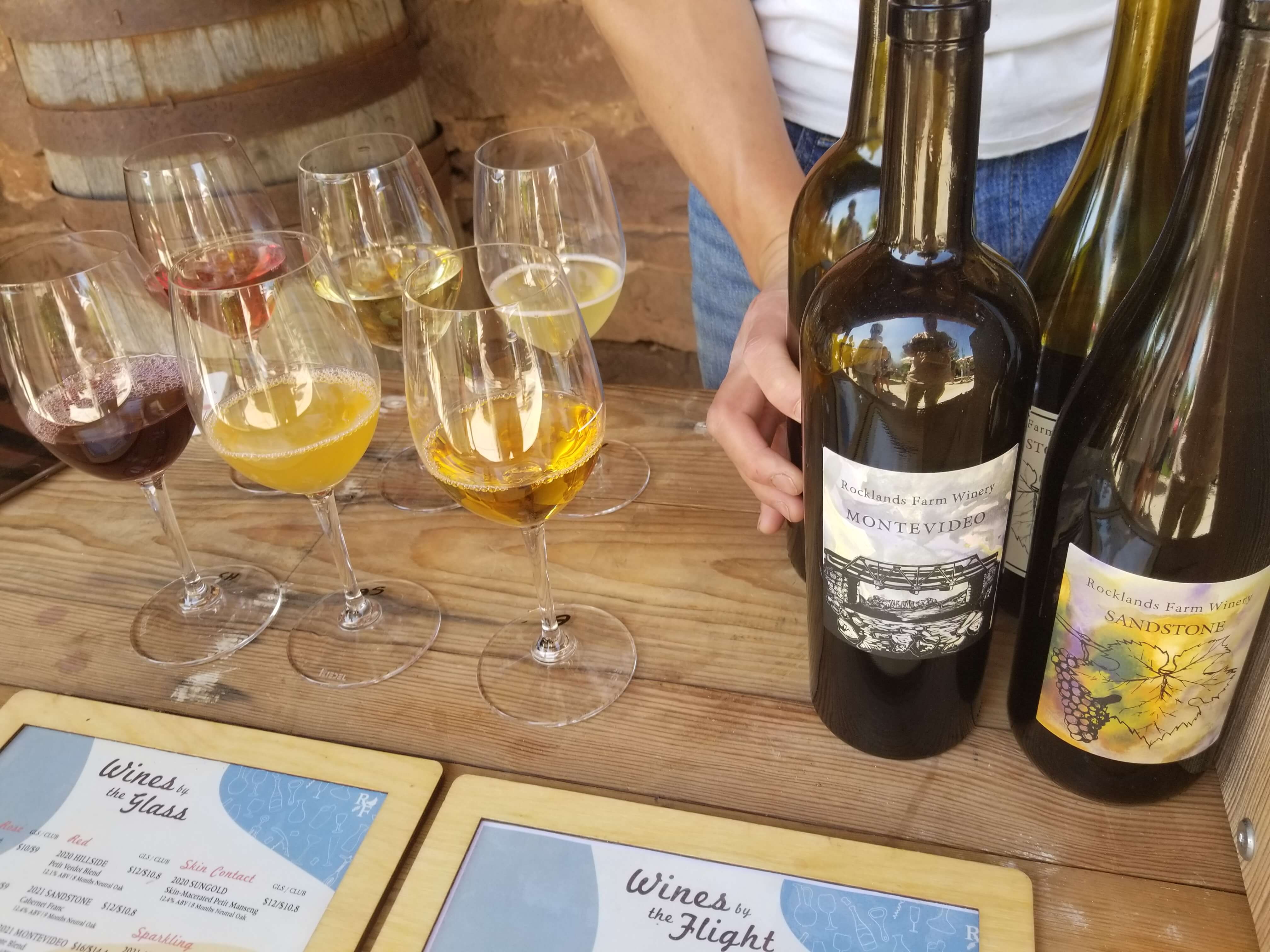
Mother's Day at Maryland's Rocklands Farm Winery

It definitely was not an original idea to visit Rocklands Farm Winery on Mother's Day, but this Maryland farm winery had plenty of staff and tasting areas to accommodate the large volume of visitors. The winery farms 16 acres of estate grapes and works with multiple regional partners to produce an interesting portfolio of "low-intervention" wines. And in the estate vineyard, they prohibit the use of herbicides - unheard of in the hot and humid mid-Atlantic summers.  According to the winery, "Overall, our goal is for our vines and soils to be healthy with a strong immune system necessary to thrive with minimal spray intervention..."

We started our visit with two wine flights providing a representation of their white, rosĆ©, and orange wine portfolio. The 2020 Sungold ($34) is one such orange wine, made from 100% skin-macerated Petit Manseng sourced from neighboring Virginia vineyards. It was fermented and aged for 15 days on the skins and 8 months in neutral French oak. Lots of tropical fruit with tart honey. The dry 2021 Anna's RosĆ© ($29) was very appreciated -- a refreshing blend of 49% Merlot, 27% Cabernet Franc, and Petit Verdot -- sourced from Maryland vineyards. I was a fan of the 2021 Ancestry Pet-Nat ($38) which is 100% Chardonnay with a bready green apple profile. However, the favorite of our group was the 2021 Fieldwork ($29) a blend of 71% Sauvignon Blanc and 29% Chardonnay with a strong floral aroma and a refreshing grapefruit core. 

We only tried two red wines, starting with the 2021 Hillside ($34) from our Spring Flight. This is a blend of 86% Petit Verdot, 7% Malbec, and 7% Cabernet Franc (sourced from Virginia) and aged nine months neutral French oak. Very approachable with silky dark fruit flavors. Very suitable for Spring.  I also purchased a bottle of their almost depleted 2021 Rockridge ($38), a barrel-aged and Maryland-grown BlaufrƤnkisch that was (like the Hillside) aged nine months in neutral French oak. This wine is an appropriate example of their low-intervention approach as it was fermented using natural yeast and bottled unrefined and unfiltered. The 2021 Rockridge is one of the best Mid-Atlantic representations of BlaufrƤnkisch that I have tasted -- red fruit, a little earthy, and lasting spice.

Thursday, October 27, 2022

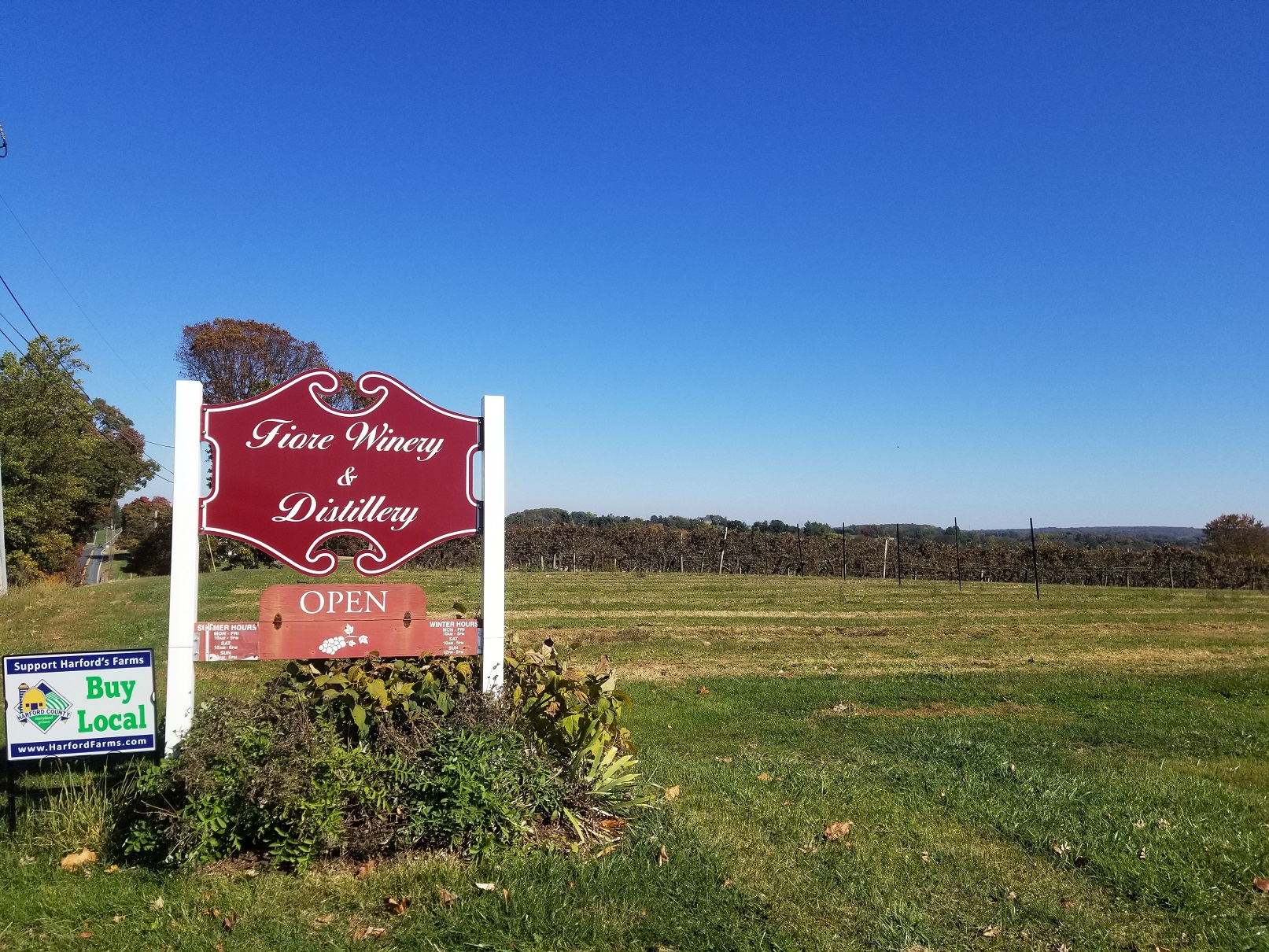
Grappa, Brandy, Vidal, and Sangiovese at Maryland's Fiore Winery & Distillery

Since attending my first Maryland wine festival about 20 years ago and through various festivals and trade tastings over the successive years, I've wanted to visit Fiore Winery & Distillery. Yet its relatively remote location with its back to the Pennsylvania border in northeast Maryland hindered that effort. Fortunately this past weekend we traveled to visit relatives in Harford County who live only minutes away from the Free State's 12th bonded winery.

This year Fiore Winery is celebrating its 36th anniversary which doesn't include the many earlier years when founder Mike Fiore joined the Maryland Wine Association and planted two acres of 150 Vidal Blanc vines. After making the difficult decision to become bonded they expanded the plantings with more French hybrids such as Chancellor and Chambourcin and it was a bottle of an aged Reserve Chambourcin that drew my attention to the winery and the wine I would seek out at future tastings and festivals. The family added several vinifera grapes to their portfolio including a uniquely Maryland Sangiovese to honor Mike's Italian heritage. And eventually seeing the popularity of craft distilling on the horizon, they incorporated distilling and warehouse operations into the farm.

Their current lineup includes a large range of dry to sweet wines and traditional spirits to flavored moonshine. The three of us shared two wine flights of seven wines each and a spirit flight of four samples. For the spirits, I chose the Bourbon Whiskey ($34.99), Straight Rye Whiskey ($29.99), Apple Brandy ($29.99), and Grappa Nicholas Reserve ($39.99). The two whiskies were excellent representatives of their genres with the Bourbon rounder than the Rye, but both having a dry lasting finish.  The Apple Brandy is a solid spirit where the apple fruit dominates the palate and ends with a clean pomme finish. Fiore produces two grappas by distilling the leftover pomace from their estate-grown grapes. The Reserve is produced by aging a portion of that spirit in specially designed 30-gallon oak casks for a minimum of two years. This rounds out the intense profile of the grappa providing roundness, nuts, and honey. Nicely done. 

We stuck to mostly their dry wines and for the whites, their traditional dry Vidal Blanc ($14.99) being the consensus among our party. The wine provides plenty of tropical and stone fruit notes and refreshing acidity -- excellent for a sunny, autumn day. Their Chambourcin 2016 ($19.99) is still one of the best produced in the Free State, aged two years in oak, and shows loads of dark fruit (without the jamminess) with a round slightly tannic finish. We tried the single varietal Cabernet Sauvignon, Cabernet Franc, and Merlot but these grapes are better represented in the Proprietor's Select Meritage 2014 ($39.99) -- a proprietary blend aged two years in new Hungarian oak barrels.  A mouthful of structured fruit and a lasting tail. Fiore is an east-coast pioneer in planting Sangiovese and offers two versions in their tasting room. The Sangiovese 2013 ($19.99) is a fresher wine whereas the Proprietor's Select Sangiovese 2014 ($39.99) is aged longer in new Hungarian oak barrels which helps create a fuller character with some earthiness and chocolate mixing with the dark fruit. The final wine was the Green Apple Riesling ($12.99) which is also canned and a little sweeter than the others. However, the tartness of the apples and acidity from the Riesling helps alleviate that sensation for a refreshing palate cleanser. 

During the visit, we learned more about the area and hope to return soon to visit the neighboring breweries (in both PA and MD) and hike to Kilgore Falls --  Maryland’s second-highest free-falling waterfall. See what other craft beverage operations are in the area using theCompass Craft Beverage Finder. Cheers. 

Tuesday, October 26, 2021

Maryland Mead and Cyser from The Buzz Meadery

The Berlin Commons is a community green space located at 21 Jefferson Street in Berlin and on Friday & Saturday nights The Buzz Meadery pours a selection of meads and ciders from their keg dispensing van.  The meadery was founded by Brett and Meghan Hines, both full-time teachers at Indian River High School. Brett is a long-time home brewer of beer and mead specializing in session products with lower abv.  They produce a range of ciders, meads (honey wine), and cysers (mead and apples) sourced directly from Eastern Shore farmers. They particularly support local farmers who use low or no pesticides in order to keep the honeybee populations healthy.

During a Friday night tour of breweries west of Ocean City we stopped at the Berlin Commons for a pint. I chose the Apple Cyser (6.9% abv) a carbonated session mead using honey from Apex Bee Company (Preston, MD) and apples from East View Farms (Frankford, DE). This is a refreshing mead, full of apple flavors with a dry and effervescent finish. Later that night I opened a bottle of their Apple + Pear (6.9% abv), another carbonated session mead using wildflower honey (Preston, MD) and apples and pears from their community orchard.  This mead is a little sweeter with the pear slightly dominating the apple but the acidity and effervescence provide a pleasant balance to the sweetness. 

And as always, theCompass Craft Beverage Finder will guide you to the Berlin Commons and other Eastern Shore establishments.

Thursday, February 18, 2021

A Trio of Wine for Old Westminster's 2021 Festival of Saint Vincent

"Each January in Burgundy, France, locals celebrate the Festival of Saint Vincent, the patron saint of winegrowers. The celebration takes place in a different winegrowing village each year. Saint Vincent celebrations attract tens of thousands of people over the weekend. Visitors pay to tour the village where local winegrowers have opened their cellars for wine tasting, and join in the fun. In the town square, the houses are decorated with paper mache flowers and many of the locals dress up in costumes from eras past. It's quirky. And beautiful. Winemakers pour special bottles of wine and offer samples of future vintages straight from the barrel."  Old Westminster Winery


For 2021, Old Westminster Winery moved their annual Festival of Saint Vincent to a virtual setting with the release of a trio of wines.  These were the 2018 Cabernet Franc, 2019 Syrah, and 2020 Blaufrankish -- pulled young from the barrel and available for purchase for $75.   The wines were delivered with no labels or corks and basically, just the bare fruit. The winery also release a short video (below) 

2018 Cabernet Franc
This was a miserable year rain-wise in the Mid-Atlantic with many wineries completely dumping their red grape harvest. That didn't stop Old Westminster as Drew Baker explains, "Looking ahead, we are mostly concerned about the reds -- ripening is going to be tricky… As a result, we're switching up our program to focus more on carbonic/juicy style reds this season. These styles are much better suited to fruit with lower phenolic ripeness, lower sugar content and higher natural acidity. We've even got a new 1,500 gal foeder to break in with whole-cluster CF next week. " And that was the beginnings of this wine and, yes, it is juicy, with bright red cherries, but there's also backbone with noticeable tannins. I wouldn't say they salvaged these grapes, I'd say Old Westminster made a remarkable wine in its own right.

2019 Syrah
The grapes for this wine were grown in Rising Sun, Maryland - located northeast of Baltimore near the Pennsylvania border.  The juice was fermented with whole cluster fermentation and native yeast with the formal proving more tannins than the whole berry fermentation of the Cabernet Franc. The Syrah starts with big voluptuous dark fruit, then black pepper and the beginnings of structure and tannins - but is not well integrated. Feels like two distinct wines but additional oak aging will enhance the structure and integrate the tannins with the fruit.

2020 Blaufrankish

These grapes were grown in Washington County Maryland - near Hagerstown and fermented using small bins and whole cluster. The wine was aged just three months in barrel before bottling, shows great fruit expression, and is very representative of the grape. Extremely fruit forward right now and appropriate body and spice. Possesses more than enough tannins and acids to grow and fortify in Hungarian or American oak. The whole cluster fermentation was a good choice. 

Cheers to Old Westminster, Maryland Wine, and the Festival of Saint Vincent.


Wednesday, November 25, 2020

Hiking with #theCompassCBF in Maryland's Catoctin Mountains

Cunningham Falls State Park and Catoctin Mountain Park are neighboring state and national parks located in the Catoctin Mountains in Thurmont, Maryland.  They are physically separated by Route 77 and offer trails ranging from easy to challenging with the moderate CMP Wolf Rock and Chimney Trail and the easy CFSP Cunningham Falls Lower Trail the most popular.  Last week we hiked the 3.4 mile Wolf Rock and Chimney Trail and added 1.4 miles by including the Thurmont Vista. Next time we will embark on the Catoctin Mountain Extended Loop Trail that includes all three of these overlooks plus the CFSP Cunningham Falls Lower Trail. And another beauty of these parks is that several wineries have sprung up near their borders. Travel northwest and you arrive at Red Heifer Winery. Head just north of Thurmont to Catoctin Breeze Vineyards. Or drive a little southeast to Links Bridge Vineyards. 

Red Heifer Winery is a 56-acre estate situated at 1,500 feet, an elevation where the grapes are allowed to cool after the hot summer day. The winery had previously been a peach and apple orchard farmed by the current owner's grandparents and the first vines were planted in 2010. These vines are a diverse set of vinifera, hybrids, and a couple native labrusca. Last year I had tasted several of their wines, remembering their 2017 Winemaker's Reserve Cabernet Franc and dry 2017 Vidal Blanc in particular. On this visit, I simply picked up a bottle of their estate-grown 2017 Blaufrankish ($28) -- because it's a Blaufrankish.  The winery has a nice winter covid set-up with bubbles and firepits. However, only 21 and up hikers permitted.

I had to stop by Catoctin Breeze Vineyards for a wine club pickup which featured, once again, a dry Vidal - this time the 2019 Intermezzo Vidal Blanc ($24).  The other wines were the 2018 Concerto Bordeaux Blend ($45) and the 2018 Opera Merlot ($36).  These last two reds wines salvaged from the horrible rainy 2018 growing season where the winery had to drop all of their Syrah and most of their Cabernet Franc.  Catoctin Breeze is a great spot to just hang out with weekend live music, food trucks, and usually an abundant portfolio of wine. 

Another spot to hangout, particularly on their patio on the Monocacy River is Links Bridge Vineyards. These long-time growers usually for Old Westminster Winery moved into the winemaking space a few years ago and are known for fantastic estate-grown Cabernet Franc. On this first time visit, we sat at a table next to a fire pit and enjoyed a fall tasting flight. The 2016 Cabernet Franc Bin 10 ($28) is made from grapes grown on their Riverside Vineyard where the oak doesn't overwhelm the fruit. Once again a dry Vidal was available - this time the 2016 Dry Vidal ($18) which is a good example of how Maryland winemakers are able to coax plenty of flavor and acidity from complete fermentation. The 2019 Chardonnay ($25) was also a solid wine, composed of grapes from both the Hillside and Riverside vineyards and with a fruit-forward and fresh profile.  Can't wait to return in the spring for some fishing and wine. 

Wednesday, August 5, 2020

Historical Significance at New Market Plains Vineyards, Maryland


In 1793 the town of New Market was founded by Nicholas Hall Sr. and William Plummer as a rest and trade stop along the Baltimore Turnpike wagon trail. The two gentlemen understood the commercial value of the turnpike and turned a half-mile section of the trail into New Market’s Main Street. In twenty years the town had grown into an important trade center for wagoners and other travelers and included "a button factory, nail factory, wheelwright shops, blacksmith shops, tanneries, dry gods, grocery stores, inns, taverns, livery stables, wagon stands, " and most importantly -- distilleries. In 1818:
..the Baltimore Turnpike became the eastern section of the National Turnpike, one of the most famous and well-traveled highways in America. The Town of New Market became an integral part of the western trade route and the multitudes who opened America’s new frontiers passed through the center of town. The first stagecoaches carrying mail traveled Main Street. Over the road came heavy freight and Conestoga wagons loaded with grain, whiskey, tobacco, lumber, iron, furs, and other products. Passenger coaches and fancy buggies stopped at the hotels, inns, and taverns. Herds of cattle, sheep, and pigs were driven through to market. Peddlers came with carts and many traveled on foot carrying all they owned on their backs. (Town of New Market)
Eventually, the railroad and the automobile would reduce the trade and rest stop significance of New Market -- but not its historical significance. And on December 6, 1975, the Town of New Market was placed on the National Register of Historical Places and under the supervision of the Department of the Interior.

At the same time, Susan Wilson, a direct descendent of Nicholas Hall Sr., was raised on the family dairy farm -- the same farm that lost a slice of land in 1792 in order to develop the town.  "Many of the old outbuildings remain intact or restored, including a stone dairy/ice house, log smokehouse with a slate roof, log chicken house, log wagon shed and stable, frame general store/tenant house, early 1900's bank barn, and a tile dairy barn (now the winery) built-in 1941" (New Market Plains Vineyards).

When she and her husband Howard inherited the property they drained their 401K accounts and planted Cabernet Franc, Cabernet Sauvignon, Chardonnay, Merlot, Muscat Blanc, Petit Verdot, and Syrah vines in 2012.  Their first harvest occurred two years later and the estate was christened New Market Plains Vineyards.


Recently we were able to enjoy the fruits of this original harvest in the 2014 Rich Forest Chardonnay ($20).  This wine is made in the Burgundian style starting with barrel fermenting and finishing in oak. This wine shows why the winery is becoming state renowned for its Chardonnay as it is balanced between oak and juice with creamy lemons and fresh acids. Our group also finished a bottle of the 2015 Windy Day White ($23), a blend of Muscat Blanc and Chardonnay that is aged in stainless steel.  The strong floral aroma is readily evident followed by tropical and citrus characters with the fresh acids alleviating the slight 0.7% sugar. We are looking forward to our next visit. Cheers. 

Friday, March 13, 2020

Extreme Viticulture: Combating the Spotted Lanternfly

Pennsylvania Department of Agriculture
Agriculture is at the heart of the wine industry and every wine region faces some type of peril. On the east coast, the newest threat is an invasive species native to China, Bangladesh, and Vietnam: the Spotted Lanternfly (also surfacing on the west coast as well).

According to Dr. Joe Fiola, of the University of Maryland Extension, the "pest was first detected in the United States in 2014 in Berks County, Pennsylvania and was accidentally imported from China through a shipment of decorative stone. The pest quickly spread and has decimated vineyards in southeastern Pennsylvania and has the capacity to inflict major damage to hop fields and hardwoods as well. Dr. Joe says the pest has spread into Maryland's Cecil and Harford Counties, West Virginia, and in Winchester Virginia at a stone and block company site. Here is how the University of Maryland Extension describes the damaged inflicted by the Spotted Lanternfly:
Both nymphs (immatures) and adults of spotted lanternfly cause damage when they feed, sucking sap from stems and leaves. This can reduce photosynthesis, weaken the plant, and eventually contribute to the plant’s death. Additionally, spotted lanternfly feeding creates a sugary substance called honeydew. This honeydew, in addition to being attractive to ants, wasps, and other insects, is readily colonized by sooty mold, which can cause parts of the plants to become blackened and look unsightly.


So how do vineyard managers fight the pest, particularly when there are no known natural enemies for biological control? Dean Scott of Pennsylvania's Bergeist Vineyard is fighting the pest through spraying and the Virginia Cooperative Extension at Virginia Tech recommends a set of insecticides (E=Excellent, G=Good). They recommend the Pyrethroids - Brigade (bifenthrin) (E) and Mustang Maxx (zetacypermethrin) (G) and the Neonicotinoids - Actara (thiamethoxam) (E), Scorpion (dinotefuran) (E), and Admire Pro (imidacloprid) (G).

At the Vineyards At Dodon, in Anne Arundel County Maryland, the winery has taken preemptive measures according to Director of Client Services Regina McCarthy starting with removing several Tree-of-heavens (Ailanthus altissima) - a deciduous tree native to China, that the Spotted Lanternfly is particularly attracted to lay eggs on.

As a consumer, the best support you could provide is to continue to, or start to, imbibe local wines. At some point, you may become personally affected as these pests invade your backyards. At that moment you become the predator.  Here's how to identify the pest courtesy of Penn State Extension.


Friday, September 27, 2019

Apple & Honey & Grape at Loew Vineyards

I last visited Maryland's Loew Vineyards back in June 2005 - an unusually long absence in revisiting wineries. I seemed to have gravitated more to Black Ankle, then to Old Westminster, and more recently to Catoctin Breeze -- but this summer my focused snapped back to this small family winery after tasting their Honey & Grape. This wine received a Gold and Best in Class at the 2019 Comptrollers Cup and just last week the prestigious Jack Aellen Cup. I had also sampled their Chancellor and noted that the inherent acidity had been tamed by fifth-generation winemaker Rachel Lipman to create a very likable dry red wine. A visit was required.

On the outside, and actually the inside, the tasting room at Loew Vineyards looked exactly as I remembered 14 years ago.  Think country store motif.  Whereas my main goal was to learn more about the Honey & Grape, it became very clear that the winery provided a rather strong portfolio that others in the industry would consider limited by the wine grapes and styles.

This started with the Two Consenting Grapes - a dry and un-oaked blend of Vidal Blanc and Reliance that was complex with both citrus and tropical notes.  The Reliance, a grape bred at the University of Arkansas as a table grape, provides the tropical aspects which are highly noticeable in the semi-dry Serendipity. The grape is also the main ingredient in the Honey & Grape.  The Loew family has been making some type of honey wine for over a hundred years starting with founder Bill Loew's family in Galicia. The honey augments the tropical flavors providing depth and balance to the grape's acidity.  Rachel also mentioned that honey wines age gracefully and they have been enjoying 20-year-old wines all summer.

One to drink immediately is their Apple & Honey Cyser which comes across very dry with the apple's tartness and acidity blending with the honey notes. A bottle came home for this week. Another fun wine is the sweeter Strawberry Jubilee where the strawberries dominate.

On a serious note, I wanted to emphasize their Chancellor - it is made in a lighter style more like a Pinot Noir with sour cherry and berry notes with approachable tannins and acids. Their Classic Red, a blend of MarĆ©chal Foch and Chancellor is similar but with more weight and pepper.  And in a few years look for Zweigelt which Rachel planted this year. I can't wait.  Come visit - theCompass Craft Beverage Finder will guide you there.

Monday, June 17, 2019

Old Westminster Winery, Burnt Hill Farm, & The Summer Solstice Festival

“We’re going to challenge current beliefs with unique and transparent wines – wines that offer balance, nuance, and character. We’re going to farm thoughtfully, using biodiverse cover crops, biodynamic principles and incorporating animals. And then, in the winery, we’re going to craft wines with a light hand, ferment with indigenous yeast, and bottle it all without fining or filtration. These wines will be made without makeup – a pure reflection of the time and place where they’re grown and the people who guided the process." Drew Baker.

Photo Courtesy of
Old Westminster Winery
This is the guiding principle behind the next phase of Maryland's Old Westminster Winery as this accomplished and innovative winery attempts to challenge contemporary winemaking through The Burnt Hill Project. The Baker family has been very successful in their previous endeavors, first by immediately impressing consumers and critics after an initial launch of Old Westminster Winery, being the first to can and successfully market Maryland wine, and creating a custom crush facility for other aspiring winemakers.  So there's little reason to conclude this next phase will not be as successful.

Burnt Hill Farm is located in northwestern Montgomery County and its name comes from the late 1800s, when the owners "despaired of growing crops in the nutrient-poor soils and made money by burning trees and brush to make charcoal, potash, and lye". The farm has the ideal gradient and clay-limestone soils congruent for Gamay and Pinot Noir, grapes normally not planted in the Free State. But why stop there. They are also planting "90 experimental varieties bred by Cliff Ambers, an iconoclastic viticulturist who pollinates native grape vines with pollen from European vinifera varieties” Dave McIntyre Washington Post.

The Bakers will continue the viticulture philosophy from their Home Vineyard in Westminster, all work done by hand, sustainable farming, minimalist winemaking, and fermenting with native yeast. They have also incorporated bio-dynamic vineyard practices at Burnt Hill Farm  -- starting two years before planting their first vines - in order to create a living organism. Biodynamic farms generate their own fertility through composting, integrating animals, and cover cropping. This effort at Burnt Hill includes rotating cover crops like wheat and daikon radish, planting manure filled bull horns that will eventually fertilize the vineyard, and introducing sheep next year.
"We choose to think of our farm as a living, breathing organism. Like a human body with a system of organs, our farm is a complex system of interacting substances and processes...> biodynamics." Drew Baker
Consumers can discover Old Westminster's minimalist approach to winemaking as well as taste a preview of what should come from Burnt Hill at their Summer Solstice Festival on June 22, 2019. Under a circus tent at Burnt Hill Farm, low-intervention winemakers from across the globe will pour 100+ unique wines. The lineup includes Broc Cellars, Hiyu Wine Farm, Zafa Wines, Floral Terranes, Margins Wine, Methode Sauvage, Iapetus Wine, Wild Arc Farm, Inconnu Wine, Johan Vineyards, The Scholium Project, Fable Farm, Purity Wine, En Cavale, Fausse Piste, Old Westminster, Lightwell Survey, Liten Buffel, Maitre de Chai, Old World Winery, Les Lunes, Ruth Lewandowski, Brooks, Art+Science, Native Selections, Zev Rovine, Williams Corner, Plant Wines, MFW, Domestique, Wines of Georgia, Revel Wine, and more...

And to learn more about the festival and Old Westminster Winery tune to #Winestudio on Twitter Tuesdays in June at 9PM E.T. Cheers and hope to see you at the Summer Solstice.